January 2026

Uncategorized

What Is an IP Television Box?

An IP television box is a device that lets you stream digital content over the internet directly to your TV. It uses advanced streaming protocols like RTP, RTSP, and HTTP to ensure efficient transmission, offering high-quality viewing experiences. With support for resolutions up to 4K and media codecs such as H.264 and H.265, it’s designed for minimal buffering and superior entertainment. IPTV USA is one of the top providers that fully leverages these features, offering a reliable and high-quality streaming experience. Understanding IP Television Technology IP television technology, often referred to as IPTV, revolutionizes how digital television content is delivered to viewers. Instead of traditional broadcasting methods, IPTV uses the internet, employing streaming protocols to transmit data packets efficiently. You’ll find that streaming protocols like RTP, RTSP, and HTTP are integral for seamless delivery and adaptive streaming. Meanwhile, media codecs such as H.264, H.265, and AVC compress and decompress video data to ensure optimal quality and minimal buffering. What Are IPTV Box Features? Building on the principles of IPTV technology, television boxes designed for IP-based content delivery boast a range of sophisticated features that enhance user experience. You’ll find streaming quality is paramount, with resolutions often supporting up to 4K, ensuring crisp, lag-free viewing. The user interface is intuitive, enabling seamless navigation through various channels and on-demand content. Customizable settings allow you to tailor your viewing experience, while regular updates ensure security and feature enhancements. Benefits of Switching to IP Television These benefits make switching a strategic choice. How to Set Up an IP Television Box Comparing Popular IP Television Box Brands Feature Roku Apple TV Interface Customizable and user-friendly Sleek, minimalistic design Content Access Wide range of free and paid channels Deep integration with iTunes and Apple services Performance Good for everyday use Faster processing and smoother playback Ecosystem Works across platforms Best experience with other Apple devices Frequently Asked Questions What Are the Costs Associated With Using an IP Television Box? You’ll face an initial investment purchasing the device, plus ongoing expenses like subscription fees and potential upgrades. Analyze the cost-effectiveness by comparing content access benefits with these financial commitments to ensure it aligns with your viewing needs. Can IP Television Boxes Work Without an Internet Connection? Without an internet connection, IP television boxes can’t access alternative streaming services. However, they might still receive local broadcasting if they’re equipped with a tuner, but this functionality depends on the specific model and its compatibility with local signals. Are There Any Legal Concerns With Using an IP Television Box? You’re wondering about the legal IPTV implications of using such devices. Be cautious, as copyright issues can arise if you access unauthorized content. It’s crucial to ensure your sources are legitimate to avoid potential legal consequences. How Do IP Television Boxes Affect Data Usage? You’re concerned about data consumption with these devices. Streaming quality significantly impacts your data usage; higher resolutions like 4K demand more bandwidth. Monitor your internet plan to ensure it supports your preferred viewing quality without exceeding limits. Do IP Television Boxes Support International Channels? IP television boxes often support international programming, enhancing channel availability. You’ll find that they typically access global networks through internet connections, allowing for diverse content. However, specific offerings depend on the service provider’s agreements and regional restrictions. An IP television box is a device that lets you stream digital content over the internet directly to your TV. It uses advanced streaming protocols like RTP, RTSP, and HTTP to ensure efficient transmission, offering high-quality viewing experiences. With support for resolutions up to 4K and media codecs such as H.264 and H.265, it’s designed for minimal buffering and superior entertainment. IPTV USA is one of the top providers that fully leverages these features, offering a reliable and high-quality streaming experience. Understanding IP Television Technology IP television technology, often referred to as IPTV, revolutionizes how digital television content is delivered to viewers. Instead of traditional broadcasting methods, IPTV uses the internet, employing streaming protocols to transmit data packets efficiently. You’ll find that streaming protocols like RTP, RTSP, and HTTP are integral for seamless delivery and adaptive streaming. Meanwhile, media codecs such as H.264, H.265, and AVC compress and decompress video data to ensure optimal quality and minimal buffering. What Are IPTV Box Features? Building on the principles of IPTV technology, television boxes designed for IP-based content delivery boast a range of sophisticated features that enhance user experience. You’ll find streaming quality is paramount, with resolutions often supporting up to 4K, ensuring crisp, lag-free viewing. The user interface is intuitive, enabling seamless navigation through various channels and on-demand content. Customizable settings allow you to tailor your viewing experience, while regular updates ensure security and feature enhancements. Benefits of Switching to IP Television These benefits make switching a strategic choice. How to Set Up an IP Television Box Comparing Popular IP Television Box Brands Feature Roku Apple TV Interface Customizable and user-friendly Sleek, minimalistic design Content Access Wide range of free and paid channels Deep integration with iTunes and Apple services Performance Good for everyday use Faster processing and smoother playback Ecosystem Works across platforms Best experience with other Apple devices Frequently Asked Questions What Are the Costs Associated With Using an IP Television Box? You’ll face an initial investment purchasing the device, plus ongoing expenses like subscription fees and potential upgrades. Analyze the cost-effectiveness by comparing content access benefits with these financial commitments to ensure it aligns with your viewing needs. Can IP Television Boxes Work Without an Internet Connection? Without an internet connection, IP television boxes can’t access alternative streaming services. However, they might still receive local broadcasting if they’re equipped with a tuner, but this functionality depends on the specific model and its compatibility with local signals. Are There Any Legal Concerns With Using an IP Television Box? You’re wondering about the legal IPTV implications of using such devices. Be cautious, as copyright issues can arise if you access unauthorized content. It’s crucial to ensure your sources are legitimate to avoid potential legal consequences. How Do IP Television Boxes Affect Data Usage? You’re concerned about data consumption with these devices. Streaming quality significantly impacts your data usage; higher resolutions like 4K demand more bandwidth. Monitor your internet plan to ensure it supports
Uncategorized

What Is Internet Protocol Television ?

You’ve encountered Internet Protocol Television (IPTV), an innovative way to stream live and on-demand video content directly over the Internet. Using advanced encoding, IPTV efficiently compresses media for delivery to devices via set-top boxes.  As mobile device usage rises, IPTV is projected to exceed $105 billion by 2029, offering flexible services like live IPTV, catch-up TV, Video on Demand, and customizable IPTV subscription options. To uncover the nuances of this evolving technology, there’s more knowledge waiting for you. Understanding IPTV Basics While traditional broadcast methods have been the cornerstone of television for decades, IPTV, or Internet Protocol Television, represents a paradigm shift in content delivery by utilizing Internet protocol (IP) over managed networks. This technology facilitates the transmission of media content, including video on demand (VOD) and live IPTV, through broadband Internet. Core components include diverse content sources, which provide live channels and on-demand videos. These are encoded by systems that compress data and are then distributed via dedicated servers. To access this myriad of streaming services, users typically utilize set-top boxes or compatible devices, ensuring a seamless experience. How Does IPTV Work? IPTV (Internet Protocol Television) is changing the way we consume entertainment by delivering TV content over the internet instead of traditional cable or satellite. Here’s a simple look at the core technologies and components that make IPTV work: Different Types of IPTV Services Building on the technological processes behind IPTV, it’s important to understand the various types of IPTV services available. IPTV services can be categorized into three main types, each offering unique experiences. Subscription-based IPTV services typically bundle these offerings, creating a comprehensive package that caters to diverse viewing needs, combining real-time, catch-up, and on-demand options in one seamless experience. The Future of IPTV and Emerging Trends The IPTV market is on a growth trajectory, projected to surpass $105 billion by 2029, fueled by digitalization and mobile devices. Subscription-based services will likely dominate as viewers demand flexible, on-demand content. Expect hybrid IPTV solutions to bridge the gap between traditional and IP-based services, easing the transition for users. Live IPTV and catch-up TV services are set to become mainstream, driven by the desire for real-time content consumption. Frequently Asked Questions How Does Internet Protocol TV Work? IPTV technology relies on video compression and network requirements to ensure stream quality and content delivery. Your user experience depends on device compatibility, channel availability, and subscription models, with future trends enhancing IPTV’s efficiency and accessibility. What Does IP Mean on TV Channels? When you see “IP” on TV channels, it denotes IPTV, where advantages include flexibility and interactivity. However, limitations like dependency on internet quality exist. Providers offer subscriptions for streaming on various devices, leveraging advanced IPTV technology and features. Is IPTV Worth Paying For? Consider streaming benefits, channel variety, and content quality. Compare subscription plans’ costs, device compatibility, and technical requirements. Analyze user experiences and market trends alongside customer support for informed decisions.

Uncategorized

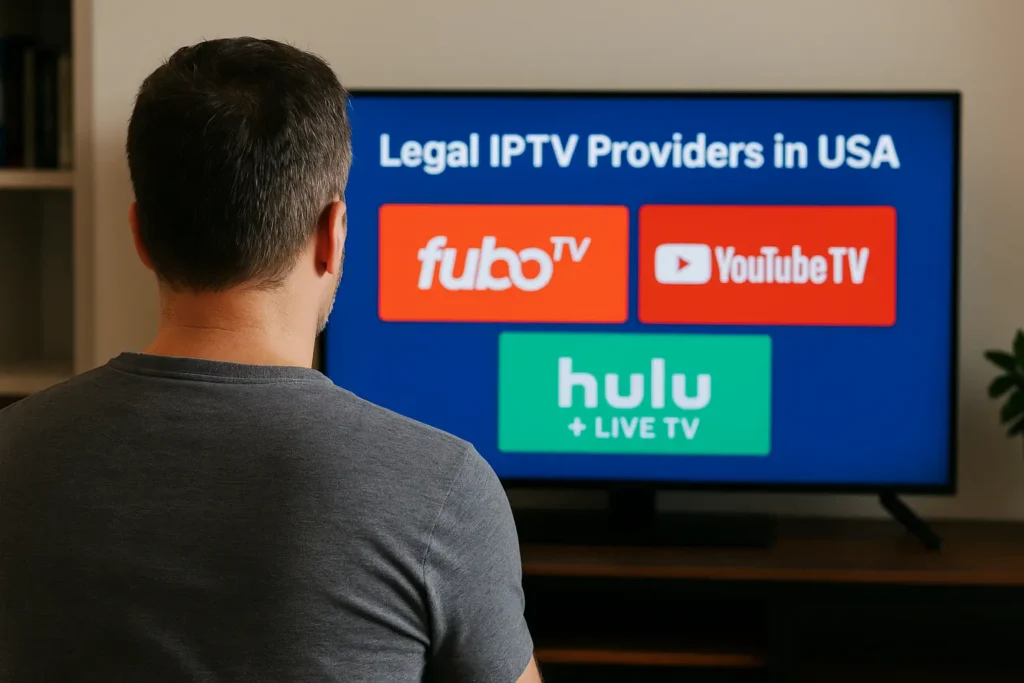
Legal IPTV Providers in USA : What You Need to Know ?

When exploring legal IPTV providers in the USA, it’s important to choose services which comply with content licensing laws. These reliable platforms offer high-quality streaming and customer support.  Unlike illegal services, they reduce legal risks and ensure a secure viewing experience. By understanding these aspects, you’ll have a clear view of what to anticipate next. Understanding IPTV Legality Although IPTV, or Internet Protocol Television, is fundamentally a legal technology for delivering television content over the internet, its legitimacy hinges on whether the provider has secured proper content licensing and rights. Legal IPTV services like IPTV USA ensure compliance by adhering to copyright laws and negotiating licensing agreements. This protects consumers and provides reliable streaming services. In contrast, unverified IPTV services often operate in a legal grey area, which can lead to copyright infringement issues. As a consumer, you should verify the legitimacy of an IPTV provider by checking their compliance with licensing agreements and regional copyright laws to avoid potential legal consequences. Differentiating Between Legal and Illegal IPTV Providers Aspect Legal IPTV Providers Illegal IPTV Providers Examples IPTV Prime Hub, YouTube TV Unverified, unnamed services Platform Type Reputable and licensed streaming platforms Unlicensed or unknown platforms Price Range $10 to $80 per month Very low, often suspicious pricing Content Access Limited by legal licensing agreements Broad channel access including restricted or pirated content Streaming Quality High, stable quality Often suffers from buffering and poor performance Customer Support Reliable customer service Typically lacks customer support Legal Risks Fully compliant with copyright laws May result in legal consequences for users Security Risks Minimal risk Potential for data breaches, malware, and personal data theft Recommendation Always choose verified providers and check for licensing Avoid unverified providers regardless of attractive pricing or content offerings Evaluating Top Legal IPTV Services in the USA Understanding the differences between legal and illegal IPTV providers is only the beginning; it’s equally important to assess the top legal services available in the USA to make informed decisions. Legal IPTV services ensure content licensing compliance, offering a reliable IPTV subscription that respects copyright laws. These platforms provide a selection of live channels and boast HD streaming, with some offering 4K content for a seamless viewing experience. Some IPTV services cater to diverse preferences with customizable subscription plans starting at $40 per month. Most legal providers offer a free trial period, allowing you to explore features before committing. Additionally, customer support is readily available, ensuring any streaming live issues are promptly addressed. Frequently Asked Questions How Do I Know if IPTV Is Legal? To determine IPTV legality, compare providers’ licensing requirements and subscription models. Review regional IPTV regulations, enforcement actions, and international laws. Verify content legality and copyright compliance. Understand user rights and avoid services with questionable legality or sideloaded apps. Do I Need a VPN for IPTV in USA? You don’t strictly need a VPN for IPTV in the USA, but it’s wise. VPNs enhance IPTV security measures, offering privacy protection, user anonymity, bypassing streaming restrictions, resolving geo-blocking issues, and ensuring legal compliance with data encryption.

Uncategorized

Why IPTV Is Not Working on Samsung TV ?

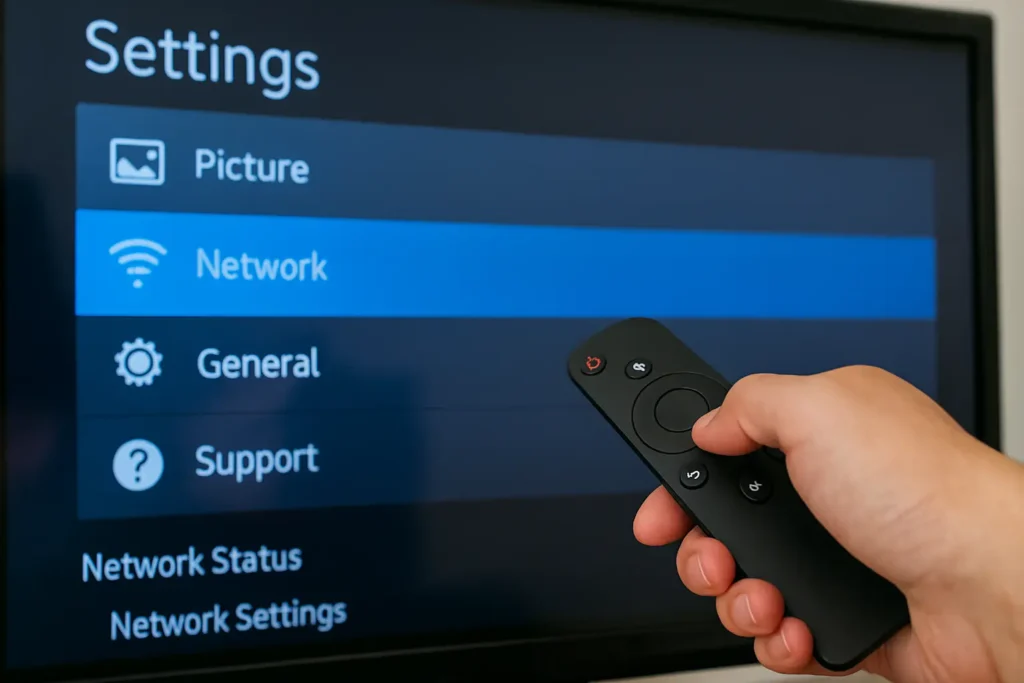
Your IPTV app may not be working on your Samsung TV because Tizen OS often has compatibility issues that don’t affect mainstream platforms like Netflix or YouTube. This can disrupt access to your IPTV subscription, especially if the app you’re using isn’t fully optimized for Samsung’s operating system. Start by checking your network settings for any DNS restrictions and make sure UPnP is enabled on your router to allow proper streaming traffic.  Beyond network checks, update your Samsung TV’s firmware to the latest version, clear the app cache, or try reinstalling the IPTV app entirely to eliminate software glitches. If these steps don’t solve the issue, consider using an external streaming device such as an Android TV box, Fire Stick, or dedicated IPTV box. IPTV App Compatibility Problems on Samsung Tizen OS When you’re trying to stream IPTV content on your Samsung TV, you’ll often encounter frustrating compatibility issues stemming from the fundamental mismatch between IPTV applications and Samsung’s Tizen operating system. Many IPTV apps aren’t fully optimized for Tizen OS, creating performance issues that don’t affect other streaming services. You’ll find that app updates can worsen compatibility when developers release versions your TV’s software can’t properly support. Hardware limitations in specific Samsung models compound these problems, restricting content access even when apps install successfully. While your TV handles Netflix or YouTube perfectly, IPTV services may fail due to unique Tizen OS incompatibilities. Network and IP Blocking Issues in IPTV Streaming Even though your Samsung TV connects to the internet without issues, network configuration problems and ISP restrictions can silently block IPTV streaming while leaving other services unaffected. Your DNS settings and firewall restrictions might prevent communication with IPTV servers, while ISP throttling specifically targets streaming protocols. Here’s how you can resolve connectivity problems: Regular network status checks help you detect ISP throttling patterns. When standard troubleshooting fails, switching DNS servers or adjusting firewall rules often restores IPTV functionality immediately. Troubleshooting Steps to Fix IPTV Apps on Samsung Smart TVs Network configuration fixes won’t help if your IPTV app itself has become corrupted or outdated. You’ll need to troubleshoot the IPTV apps directly on your Samsung TV. Start by force-closing the problematic app, then unplug your TV for five minutes to complete a power cycle. Next, update both your Samsung TV’s firmware and the app through Settings. Navigate to Support > Software Update for system updates, then check your app store for application updates. If you’re still experiencing issues, clear the app’s cache and data through your TV’s settings menu. When problems persist, uninstall and reinstall the app after restarting your TV. Finally, verify your internet connection stability by checking Settings > General > Network > Network Status. If your network status shows issues, restart your router. When to Consider Alternative Solutions Like External Set-Top Boxes Although you’ve exhausted all troubleshooting options, your Samsung TV’s built-in IPTV apps might still fail due to fundamental compatibility issues with the Tizen operating system. When persistent problems occur despite troubleshooting efforts, it’s time to consider an external set-top box as your solution. Here’s why you should switch: If you’re experiencing recurring issues or multiple users report similar problems with your TV model, investing in a set-top box ensures a reliable connection to your IPTV content. This alternative eliminates app-related frustrations while delivering better overall functionality. Provider-Side Issues and How to Verify Your IPTV Service Status Server outages and maintenance windows can disrupt your IPTV streaming without warning, making it crucial to verify whether the problem originates from your provider’s end rather than your Samsung TV. You’ll want to check your IPTV provider’s status page or social media channels for reported service disruptions affecting content delivery. Contact customer support directly to confirm any known issues with their servers. Verify you’ve got an active subscription that hasn’t expired. Some providers require manual playlist refresh through their app settings—this simple step often resolves connectivity problems. Testing on different device helps isolate whether it’s a Samsung TV-specific issue or provider-wide problem. If the service works elsewhere, you’ve narrowed down the troubleshooting scope to your TV’s configuration rather than suspecting server-side failures. Frequently Asked Questions Why Is My IPTV Not Working on My TV? Your IPTV isn’t working likely due to outdated TV firmware, app compatibility issues, or unstable internet connection. First, check your TV’s software updates, reinstall the IPTV app, clear its cache, and verify your playlist URL’s validity. Can I Watch IPTV on My Samsung Smart TV? Yes, you can watch IPTV on your Samsung Smart TV. You’ll need to download compatible apps like Smart IPTV or IPTV Smarters Pro from the Apps section, then input your provider’s M3U link or playlist URL. What Is Blocking My IPTV? Your IPTV’s likely blocked by ISP throttling, geographic restrictions, or firewall settings. Check if you’re using an outdated app version, misconfigured VPN, or if your router’s blocking required ports. Try disabling VPN and updating firmware. How Do I Get IPTV to Work on My TV? You’ll need to install an IPTV app like Smart IPTV from your TV’s app store, then enter your provider’s M3U playlist URL. Ensure you’ve got stable internet and updated TV firmware before launching the service.

Uncategorized

How to Correctly Configure Setting IPTV ?

You’ll need to configure your router’s VLAN settings with ID 18 or 27 per ISP specifications, enable IGMP Proxy for multicast management, and select the appropriate IPTV mode (Bridge/Singapore-ExStream). Connect your STB via Ethernet to a dedicated LAN port, ensuring 10-15 Mbps bandwidth for HD streams. Access your router’s admin panel, implement ISP-specific modes like Unifi or Maxis, and verify VLAN tagging matches provider requirements. Master these configurations to unlock seamless IPTV performance optimization techniques. Check the Basics Make sure you have a good internet connection (at least 5 Mbps for SD, 10–15 Mbps for HD). Prepare a compatible device such as a Firestick, set-top box, smart TV, or mobile. You’ll also need an active IPTV subscription from a reliable provider. Adjust Your Router Settings Go into your router’s settings and enable the IPTV option (VLAN). Your ISP usually gives you a VLAN number (like 18 or 27). This step separates IPTV traffic from normal internet traffic and helps avoid buffering. Pick Your ISP Mode In the router menu, choose your provider’s IPTV mode (for example: ExStream, Unifi, Maxis). If you’re using Bridge mode, assign a LAN port and connect your IPTV device to it with an Ethernet cable. If needed, enter the VLAN number your ISP gives you manually. Optimize Your Network For the best quality, connect your IPTV box or TV by cable instead of Wi-Fi. This reduces lag and interruptions. If your router supports it, dedicate one port for IPTV only, so it always gets enough bandwidth. Troubleshoot if Something Goes Wrong If IPTV doesn’t work, double-check the VLAN number, restart your router, and confirm your subscription details. Errors like “portal unreachable” usually mean wrong VLAN settings or low internet speed. If problems continue, contact your ISP for help. Frequently Asked Questions How Can I Make IPTV Work Better? You’ll optimize IPTV performance by ensuring 10-15 Mbps bandwidth, switching from Wi-Fi to ethernet, updating your app’s firmware regularly, adjusting QoS settings for HD/SD content, and configuring VLAN isolation on managed switches for traffic segregation. How to Configure a Router for IPTV? You’ll configure your router’s IPTV by selecting ISP-specific modes (Bridge/Custom), inputting VLAN IDs, assigning STB-dedicated LAN ports, enabling IGMP Proxy, then saving and rebooting. Connect your set-top box to the designated IPTV port for functionality. How to Organize Channels on IPTV? You’ll need to access your IPTV app’s settings menu, create custom folders/categories for genre-based organization, then drag-and-drop channels or use UI arrows for reordering. Assign channel numbers for quick access and regularly update M3U playlists. Does It Matter Which IPTV App You Use? Yes, it’s crucial. You’ll need app compatibility with your device’s OS, support for M3U/XSPF formats, efficient buffering algorithms, and CDN optimization. Check app’s EPG integration, codec support (H.264/H.265), and API stability before selecting your IPTV client.

Uncategorized

How to Search on IPTV ?

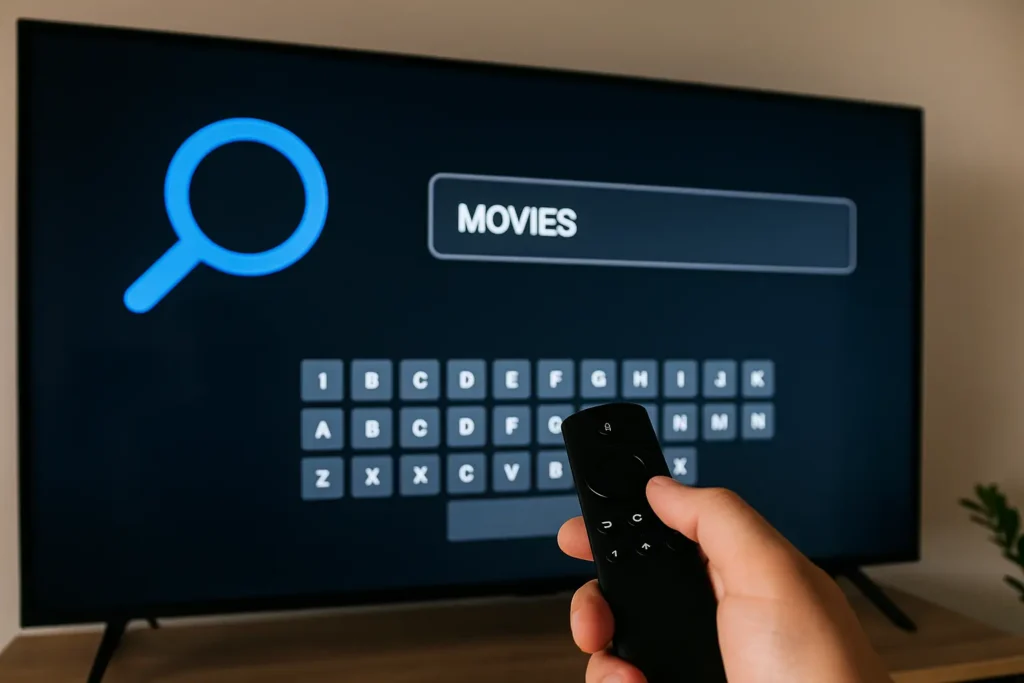
You’ll access IPTV search through your remote’s magnifying glass icon or by holding the microphone button for voice commands. Navigate the on-screen keyboard using directional buttons to enter specific keywords like show titles, actor names, or genres. Apply filters for language, release date, or category to refine results within your IPTV subscription. Most IPTV apps like StbEmu and Perfect Player support advanced search features with customizable settings. Master these navigation techniques to transform how you discover and enjoy content through your subscription. Setting Up IPTV Search on Your Firestick Device Three essential components make up a functional IPTV search system on your Firestick: a compatible IPTV app, proper remote use, and updated software. With these in place, you’ll easily find shows, movies, and channels. By combining the right app, your Firestick remote, and updated software, you’ll get a smooth IPTV search experience. Using Voice Commands and Remote Buttons for Quick Searches How efficiently can you navigate through thousands of channels without endless scrolling? Your Amazon Fire TV transforms the search on IPTV using voice commands into a streamlined process. Press and hold the microphone button on your remote, then speak specific keywords—actor names, favorite shows, or genres—to activate the search capabilities instantly. You’ll enhance your viewing experience by mastering the directional buttons for navigation through search methods without typing. Each of your IPTV apps may feature different voice command compatibility, so familiarize yourself with their unique interfaces. Keep your applications updated to access improved search algorithms and functionalities. When the voice feature isn’t available, use the on-screen keyboard with precise terminology for quick results. These integrated search capabilities eliminate time-consuming manual browsing through your content library. Navigating Search Menus and Applying Filters Beyond voice commands, you’ll need to master the visual search interface to locate specific content across your IPTV platform. Find the magnifying glass icon on your Firestick remote to access the search menu. You’ll use directional buttons to navigate the on-screen keyboard and enter specific keywords like titles, genres, or actor names. Most apps offer filter categories to refine results by genre, language, or release date. Familiarize yourself with the menu layout to boost navigation efficiency and minimize search issues. Apply available filters systematically to narrow down popular streaming options that match your preferences. Customizing Search Settings and Creating Watchlists After you’ve mastered basic navigation, you’ll want to personalize your IPTV search experience through customizable settings and organized watchlists. Most IPTV apps let you refine customizing search settings by selecting preferred genres, languages, or release dates to generate more relevant search results. You can save specific searches and filter configurations for instant retrieval later. Creating a watchlist serves as your content hub, helping streamline viewing experience by centralizing favorite titles. You’ll receive notifications when new episodes or movies matching your watchlist become available. This systematic approach enhances content discovery—remove completed series and add fresh selections regularly. Troubleshooting Common Search Problems and Remote Issues When your IPTV search function suddenly stops working or your remote becomes unresponsive, you’ll need a systematic diagnostic approach to identify and resolve the root cause quickly. First, restart your IPTV app and verify your internet connection’s stability, as network issues frequently disrupt search functionality on portable streaming devices. If problems persist across IPTV services, perform cache clearing or reinstall the application entirely. For unresponsive Firestick remote issues, reset by removing batteries or re-pairing through settings. You’ll want to install app updates regularly since developers continuously enhance specific search functionalities. When experiencing limited search options, explore key mapping configurations within your IPTV app’s settings. This feature allows remapping remote buttons to access advanced search tools, ensuring optimal navigation across your preferred streaming content. Frequently Asked Questions Can You Search in IPTV? Yes, you can search in IPTV apps. You’ll typically find a magnifying glass icon to access the search interface. Enter keywords, titles, or actors’ names. Some apps offer voice search and advanced filters for refined results. How Do I Search for Channels on IPTV? You’ll search for channels by clicking the magnifying glass icon in your IPTV app. Use directional buttons to type channel names on the on-screen keyboard. Try voice search by holding your remote’s microphone button for faster navigation. How to Use IPTV Step by Step? You’ll first connect your device to stable internet, then install an IPTV app from your device’s store. Open the app, navigate using remote controls, browse channel categories or use the search function to find content. How to Find a URL for IPTV? You’ll find IPTV URLs through reputable providers’ official websites, online forums, or searching “free IPTV m3u URLs.” Check community groups for shared playlists, verify service legitimacy, and ensure copyright compliance before using any streaming links.

Uncategorized

Do I Need a VPN for IPTV ?

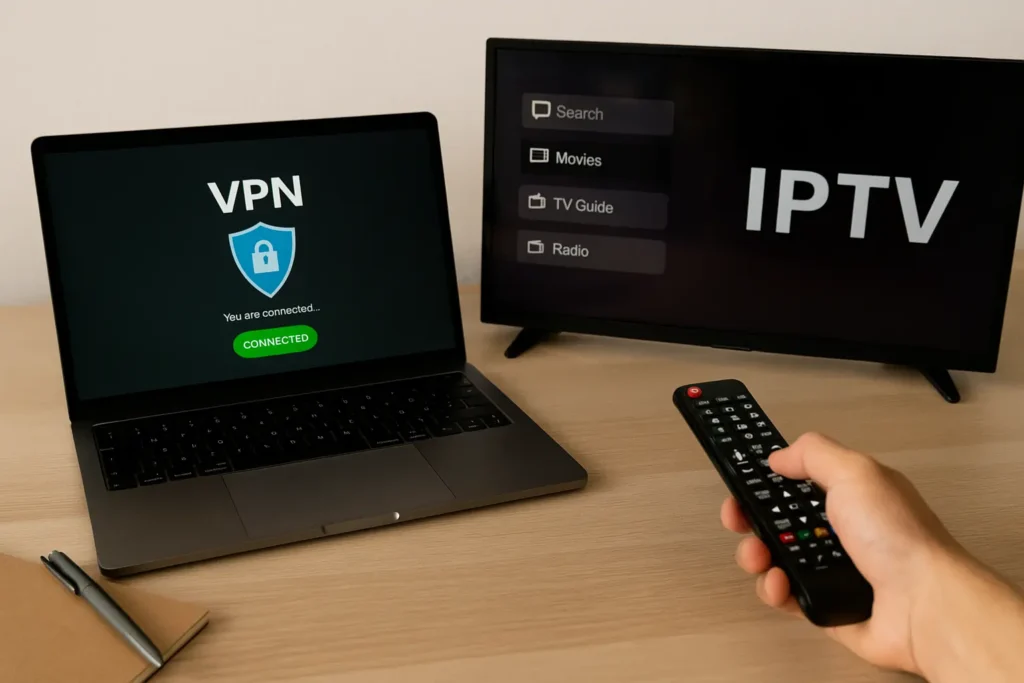
You’re exposing your streaming activity to ISP monitoring and potential legal scrutiny when connecting to IPTV services without VPN the encryption protocols. Your ISP can track accessed streams, log timestamps, and implement bandwidth throttling through deep packet inspection.  A VPN establishes end-to-end encryption using AES-256 or WireGuard protocols, masking your IP address and preventing traffic analysis. While you’ll face 10-30% speed reduction on unoptimized servers, proper configuration protects against copyright enforcement agencies accessing your viewing metadata. How IPTV Services Expose Your Online Activity ? When you’re streaming through your IPTV subscription, your internet traffic flows through multiple network nodes without encryption, creating a detailed digital footprint that’s visible to anyone monitoring the connection. Your ISPs can track every stream you access, logging timestamps, content sources, and bandwidth consumption patterns. Without secure encryption protocols, IPTV services expose your viewing habits to third-party surveillance and data harvesting operations. You’re particularly vulnerable because unencrypted connections reveal your actual IP address to IPTV providers who may share logs with copyright enforcement agencies, exposing you to legal risks. ISPs also implement deep packet inspection to identify streaming protocols, often triggering bandwidth throttling during peak usage. Key Benefits of Using a VPN With IPTV Streaming When streaming IPTV, your connection and data can be exposed to several risks. Using a VPN helps protect your privacy, improve streaming quality, and bypass restrictions. Here are the key benefits explained point by point: Potential Risks and Drawbacks of VPN Usage for IPTV While VPN encryption protocols enhance IPTV streaming security, you’ll encounter performance degradation through bandwidth overhead that manifests as 10-30% speed reduction on unoptimized servers.  Free VPN services amplify risks associated with using inadequate encryption standards, exposing you to cyber threats through compromised AES-128 implementations and outdated OpenVPN configurations. You’re vulnerable to data selling practices when providers monetize traffic logs and DNS queries. Streaming performance issues include buffer underruns and packet loss, particularly when VPN servers lack dedicated bandwidth allocation. Compatibility issues arise with IPTV applications detecting VPN traffic through deep packet inspection, blocking access entirely.  Choosing the Right VPN Provider for Your IPTV Needs Factor What to Look For Why It Matters for IPTV Examples / Notes Provider Choice Reliable VPNs with proven streaming unblocking Reduces vulnerabilities and ensures access to IPTV content NordVPN, ExpressVPN, Surfshark Encryption & Protocols AES-256, WireGuard, DNS leak protection Protects data, prevents ISP throttling, and secures IPTV activities Strong privacy + stable performance Server Infrastructure High server density across regions Bypasses geo-restrictions and maintains speed during streaming More servers = better reliability Performance Metrics Low latency, minimal packet loss, stable throughput Ensures smooth playback without buffering or drops Check user reviews for peak-time stats Customer Support 24/7 technical assistance Quick resolution of connection or protocol issues Live chat & fast response are essential Advanced Features Split-tunneling configurations Isolates IPTV traffic, optimizes bandwidth use, keeps security intact Useful when multitasking with other apps Setting Up and Optimizing Your VPN Connection for IPTV Download and Install Your VPN AppStart by downloading the official app from your VPN provider. This ensures you get the latest version with full support for encryption, tunneling, and streaming optimizations. Select the Right Server LocationChoose servers geographically close to your location to minimize latency. If your goal is to bypass IPTV geo-blocks, connect to servers in the regions where content is accessible. Optimize Protocol SelectionPick the most efficient tunneling protocol for IPTV. WireGuard generally delivers better throughput and lower latency compared to legacy OpenVPN, while still maintaining strong encryption and security. Test and Identify Optimal ServersRun systematic checks by connecting to different servers and measuring streaming performance. Look for stable throughput, minimal buffering, and reliable connections during peak viewing times. Enable the Kill SwitchActivate your VPN’s kill switch feature. If your VPN connection drops, this function blocks all internet traffic instantly—preventing your ISP from detecting IPTV usage and protecting your privacy. Frequently Asked Questions Do You Really Need a VPN With IPTV? You don’t technically require a VPN, but you’re exposing yourself to ISP throttling, DMCA notices, and packet inspection without one. Your unencrypted traffic reveals streaming protocols, making you vulnerable to bandwidth manipulation and potential legal action. Will IPTV Work Without a VPN? Yes, IPTV will work without a VPN through standard TCP/IP protocols, but you’ll face ISP throttling, DPI monitoring, and potential DMCA violations. Your unencrypted traffic remains visible, exposing streaming habits and risking bandwidth management interventions. Is IPTV Legal in the United States? Yes, you’re IPTV is legally permitted to use it, that’re properly licensed. However, you’ll face copyright violations and potential criminal charges if you’re streaming unlicensed content through unauthorized IPTV providers without proper licensing agreements. What Happens if I Don’t Use a VPN? You’ll face ISP throttling, exposed IP addresses during streaming, and unencrypted data packets vulnerable to man-in-the-middle attacks. Your ISP can log viewing habits, potentially share data with third parties, and you’re blocked from geo-restricted content.

Uncategorized

What Are the Best Movies on IPTV in 2026 ?

Movies on IPTV open the door to an endless sea of content, but the real cinematic treasures often hide beneath surface-level suggestions. You’re accessing curated libraries that rival those of leading IPTV services, offering everything from Jason Statham’s latest explosive thrillers to restored cult sci-fi classics like Solaris.  Smart viewers bypass algorithm-driven mediocrity to discover festival darlings, international nail-biters, and indie gems that premiered at Sundance. The channels offering genuine comedic gold and prestige dramas await those who know where to look. 1. The Grand Budapest Hotel Wes Anderson’s masterpiece combines quirky humor, eccentric characters, and a visually stunning style. Set in a luxurious European hotel, the film follows the adventures of the concierge Gustave H. and his protégé Zero. The mix of comedy, drama, and stylish cinematography makes it an unforgettable experience. It’s the perfect choice with an IPTV subscription for those who enjoy both laughter and artful storytelling. 2. Knives Out This modern whodunit, starring Daniel Craig, Chris Evans, and Ana de Armas, redefines the mystery genre. A wealthy patriarch is found dead, and every family member becomes a suspect. Packed with clever dialogue, sharp satire, and unexpected twists, Knives Out keeps viewers hooked until the very last reveal. A must-watch for fans of suspense and witty entertainment. 3. Some Like It Hot Starring Marilyn Monroe, Tony Curtis, and Jack Lemmon, this classic comedy remains one of the funniest films ever made. Two musicians disguise themselves as women to escape mobsters, leading to endless chaos. Decades later, the film’s charm, humor, and unforgettable performances continue to captivate audiences. It proves that great writing and comedic timing never go out of style. 4. The Princess Bride A perfect blend of romance, adventure, and comedy, this cult classic has everything: sword fights, love stories, and witty one-liners. Its fairy-tale setting makes it timeless. Generations of viewers still quote its lines and revisit it for feel-good fun. On IPTV, it’s the ultimate family film that delivers both heart and humor. 5. Solaris Andrei Tarkovsky’s 1972 classic is a deep, philosophical exploration of human memory and emotion. The story takes place on a space station orbiting a mysterious planet.Unlike typical sci-fi action films, Solaris focuses on the human psyche, love, and loss. It’s slow, thought-provoking, and best suited for viewers who enjoy reflective cinema. 6. Moon This indie sci-fi starring Sam Rockwell tells the story of a man nearing the end of his three-year mission on the Moon.  As he faces strange occurrences, he begins to question his identity.Minimalist but emotionally powerful, the film explores loneliness and humanity’s relationship with technology. It’s one of IPTV’s hidden gems for sci-fi lovers. 7. John Wick Keanu Reeves delivers one of his most iconic performances as a retired hitman seeking revenge. The film is known for its incredible fight choreography, style, and nonstop intensity. What sets John Wick apart is its unique underworld mythology and visual flair. It redefined the action genre and remains a fan favorite on IPTV platforms. 8. Parasite Bong Joon-ho’s Oscar-winning film is a masterful mix of thriller, drama, and dark comedy. It tells the story of a poor family who infiltrates a wealthy household with life-changing consequences. With sharp social commentary and unpredictable twists, Parasite keeps viewers engaged from start to finish. It’s both entertaining and thought-provoking, a rare cinematic achievement. 9. Inception Christopher Nolan’s blockbuster dives into the world of dreams, blending sci-fi with action and psychological drama. Leonardo DiCaprio leads a team tasked with planting an idea in someone’s subconscious. With breathtaking visuals and a mind-bending storyline, Inception challenges viewers to question reality. It’s one of the most iconic films to stream on IPTV for fans of epic cinema. 10. Mad Max: Fury Road George Miller’s post-apocalyptic masterpiece is pure cinematic adrenaline. Tom Hardy and Charlize Theron race across the desert in a visually explosive chase filled with jaw-dropping stunts. Praised for its action, practical effects, and feminist themes, the film redefined what modern action movies could be. On IPTV, it’s an absolute must-watch for thrill-seekers. Frequently Asked Questions How Much Does an IPTV Subscription Typically Cost per Month? You’ll typically pay $10-25 monthly for IPTV subscription prices, though premium services reach $50. Cost comparison reveals legal options like Sling or YouTube TV offer better reliability than sketchy $5 services that’ll likely disappear overnight. Is IPTV Legal to Use in My Country or Region? IPTV legality varies drastically by region – you’ll need to check local IPTV regulations carefully. While legitimate services exist, many operate illegally by streaming copyrighted content without licenses. You’re risking fines if you choose unauthorized providers. What Internet Speed Do I Need for Smooth IPTV Streaming? You’ll need at least 10 Mbps internet speed for HD streaming quality, but here’s the insider truth: 25 Mbps ensures buffer-free viewing. For 4K content, you’re looking at 50+ Mbps minimum to avoid frustrating interruptions. Can I Watch IPTV on Multiple Devices Simultaneously? Yes, you’ll love IPTV’s multi device usage capabilities! Most providers offer 2-4 simultaneous streams, though quality services provide more. The streaming benefits include whole-family viewing on different screens—it’s a game-changer for modern households’ entertainment needs. How Do I Set up IPTV on My Smart TV? You’ll download your provider’s app directly from your Smart TV’s app store, then enter login credentials. IPTV benefits include instant access to thousands of channels. Check Smart TV compatibility first—most Samsung, LG, and Android models work seamlessly.

Uncategorized

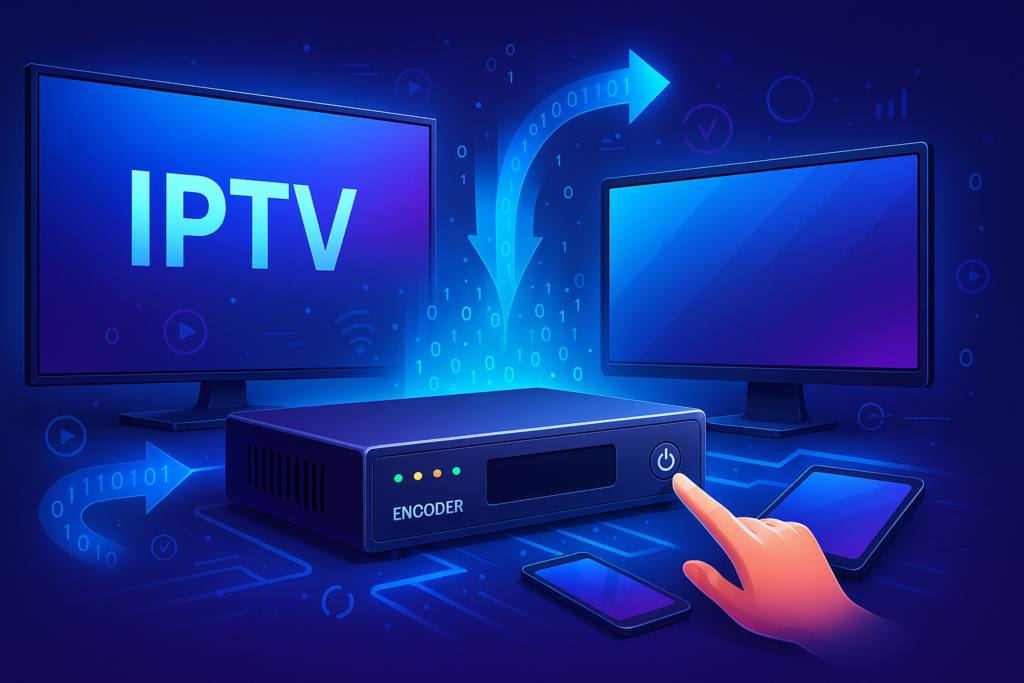
What Is an IPTV Encoder and How Does It Work ?

You’ll find IPTV encoders transform raw SDI, HDMI, or composite video feeds into compressed H.264/H.265 streams for IP network transmission. They’re processing baseband signals through DSP chips and FPGAs, applying motion estimation and DCT transforms to achieve up to 80% bandwidth reduction.  For anyone running an IPTV subscription, this step ensures smooth streaming across multiple devices without exhausting bandwidth. Your encoder then packages these elementary streams into MPEG-TS or HLS containers, adding timestamps and error correction codes for reliable delivery.  Understanding the Basics of IPTV Encoding Technology When you’re deploying IPTV infrastructure, the encoder serves as the critical first component that transforms raw video signals into compressed digital streams suitable for IP network transmission.  Your encoder ingests SDI, HDMI, or composite feeds, then applies compression algorithms following IPTV standards like H.264/AVC or H.265/HEVC. You’ll configure encoding formats based on bandwidth constraints and quality requirements.  The encoder processes video frames through motion estimation, DCT transformation, and quantization stages. It simultaneously handles audio compression using AAC or MP3 codecs.  Key Components and Features of IPTV Encoders Aspect Description Hardware & Software Architecture IPTV encoders rely on DSP chips, FPGAs, or GPU acceleration to achieve real-time transcoding. Input Interfaces Support for SDI, HDMI, or IP streams, combined with adaptive bitrate management algorithms that dynamically adjust compression parameters. Performance Metrics Key metrics include latency, throughput capacity, and codec efficiency for optimal streaming quality. System Reliability Features like redundant power supplies, hot-swappable modules, and SNMP monitoring ensure stability and uptime. Multiplexing & Bandwidth Optimization Advanced multiplexing capabilities, including statistical multiplexing, optimize bandwidth usage and maintain service quality. Rate Control Mechanisms Built-in controls regulate bitrates to guarantee consistent QoS (Quality of Service) delivery. . The Step-by-Step Process of Video Signal Conversion Types of IPTV Encoders and Their Applications Hardware Encoders Software Encoders Hybrid (Cloud + Hardware) Encoders Frequently Asked Questions How Much Does a Professional IPTV Encoder Typically Cost? You’ll find affordable options starting around $500-$2,000 for basic H.264 encoding systems, while high-end models with multi-channel processing, HEVC support, and redundant architecture typically range from $10,000-$50,000 depending on your broadcast infrastructure requirements. Can I Use an IPTV Encoder With My Existing Cable TV Subscription? You can’t directly connect an IPTV encoder to your cable subscription due to cable compatibility restrictions. IPTV integration requires unencrypted video sources like HDMI output from set-top boxes, bypassing DRM through capture cards or component connections. Is It Legal to Use IPTV Encoders in All Countries? No, you can’t assume universal IPTV legality across jurisdictions. International regulations vary significantly—you’ll need to verify local broadcasting laws, content distribution rights, and transmission protocols. Some regions restrict encoder deployment without proper licensing frameworks. What Internet Upload Speed Do I Need for IPTV Encoding? You’ll need minimum 5 Mbps upload speed for standard definition, 10-15 Mbps for 720p, and 25+ Mbps for 1080p streams. Your encoding quality settings, bitrate configuration, and concurrent stream count directly impact bandwidth requirements for stable transmission. How Long Do IPTV Encoders Typically Last Before Needing Replacement? You’ll get 5-7 years lifetime expectancy from commercial-grade encoders with proper thermal management. Maintenance tips: clean dust filters monthly, monitor component temperatures, update firmware regularly, and replace electrolytic capacitors preventively to maximize operational lifespan.

Uncategorized

What Is the Best Cheap IPTV Service ?

You’ll find the best cheap IPTV services priced between $10–$20 monthly, offering optimal value with 10,000+ HD/4K channels and 99.9% uptime reliability. When comparing providers, you should prioritize those with stable servers, EPG functionality, and multi-device support over ultra-low prices that often indicate poor quality or illegal operations. Among the trusted options, IPTV USA stands out as a reliable IPTV provider, delivering professional-grade streaming with consistent performance. Services under $5 typically lack customer support and refund policies, while those around $15 deliver professional streaming with minimal buffering. The following sections reveal specific providers and optimization techniques. Top Budget-Friendly IPTV Services Worth Your Money When you’re searching for an IPTV service that won’t break the bank, you’ll find the market flooded with options ranging from $5 to $25 monthly, but only a handful deliver reliable streaming performance alongside competitive pricing.  You’ll want to prioritize providers offering stable servers with 99.9% uptime, HD/4K content libraries exceeding 10,000 channels, and multi-device compatibility. User reviews consistently highlight three critical factors: buffering frequency, EPG accuracy, and customer support responsiveness.  Essential Features to Look for in Affordable IPTV Providers While price remains a primary consideration, you’ll need to evaluate specific technical features that separate reliable IPTV providers from substandard services.  Red Flags to Avoid When Choosing Cheap IPTV Services The marketplace for budget IPTV services harbors numerous providers that’ll compromise your security, viewing experience, or financial information. You’ll need to identify warning signs before committing to any subscription. Critical Red Flags: When providers lack transparent pricing, hide contact information, or request unusual payment methods, you’re likely encountering fraudulent operations. Always verify licensing and user reviews. Comparing Pricing Plans and Channel Packages Across Popular Options Criteria Details to Evaluate Pricing Models Some services offer tiered plans (e.g., $10–15 monthly), while others provide à la carte options. Basic Packages Typically include 50–100 channels with standard content. Premium Packages Can offer 500+ channels, often with sports, movies, and international programming. Channel Diversity Assess variety across genres (news, sports, local, international) to match your preferences. Hidden Costs Watch out for device limits, DVR storage fees, or extra charges. Value Alignment Match the plan with your viewing habits to maximize cost-effectiveness. Setting Up and Optimizing Your Budget IPTV Service for Best Performance Once you’ve selected your budget IPTV service, you’ll need to configure it properly to ensure optimal streaming performance and minimize buffering issues. These installation tips will maximize your viewing experience while preventing common technical problems. Essential performance optimization steps: You’ll notice immediate improvements in stream quality and reliability. Frequently Asked Questions Is Using Cheap IPTV Services Legal in My Country? IPTV legality varies significantly across jurisdictions. You’ll need to verify your country’s broadcasting laws and regional restrictions. While hardware and apps aren’t illegal, accessing copyrighted content without proper licensing violates copyright laws in most nations. Can I Use One IPTV Subscription on Multiple Devices Simultaneously? You can’t typically use one IPTV subscription on multiple devices simultaneously. Most providers restrict subscription sharing to prevent account abuse. You’ll need multi-device plans or additional connections, though some services offer 2-3 concurrent streams. What Internet Speed Do I Need for Smooth IPTV Streaming? You’ll need 10-15 Mbps for HD streaming quality and 25+ Mbps for 4K content. Bandwidth requirements vary by resolution: SD needs 3-5 Mbps, while multiple simultaneous streams demand proportionally higher speeds for buffer-free performance. Will Cheap IPTV Services Work With My Smart TV or Streaming Device? You’ll find most cheap IPTV services offer smart TV compatibility through dedicated apps or M3U playlists. Streaming device options include Android boxes, Firestick, and Roku, though app availability varies between providers and platform restrictions. How Reliable Is Customer Support From Budget IPTV Providers? You’ll typically find inconsistent customer support with budget IPTV providers. Service response times vary widely, with customer satisfaction rates averaging 40-60% compared to premium services’ 80-90%. Most offer only email support without live chat or phone options.

Scroll to Top